Coming Full Circle – A Visit To NPC’s Clinic at Wesley Chapel

Coming Full Circle – A Visit To NPC’s Clinic at Wesley Chapel

Coming Full Circle – A series of 4 Blog Posts describing our experiences visiting the Norman Parathyroid Center. This is the first post of the series….

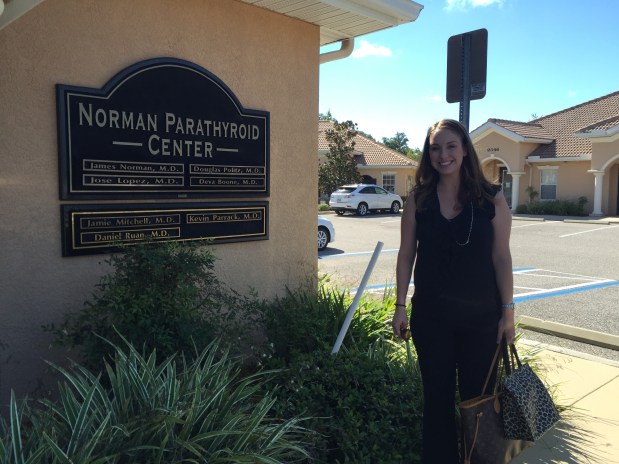
This past week we experienced the “field trip” of a lifetime … we revisited the Norman Parathyroid Center where we each had our surgeries performed- Barbara in 2011, Joyce in 2013 and Sophie in 2014, but THIS time we were collaborating as advocates to raise awareness of the disease rather than as patients. While physically cured by our surgeries years ago, there was an unexpected emotional healing that occurred being on the “other side” now and coming full circle in our journeys. We are creating four blog posts about our experiences – what we both observed and learned. We hope you enjoy!

———–

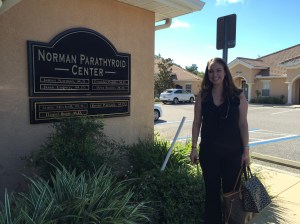
On Day 1, after obtaining our hospital clearances at Tampa General Hospital where all surgeries are performed, we drove approximately 20 miles north to Wesley Chapel where the Norman Parathyroid Clinic is located. While we knew there were behind the scenes staff coordinating patient intake, we couldn’t fully appreciate the magnitude of what is required to facilitate the 12-14 surgeries that are scheduled per day until we saw it first-hand. In fact, the venture has grown so much over the last few years, that their administrative staff has tripled in size and thus have outgrown their original office space and have expanded to a second building.

IMG_2293

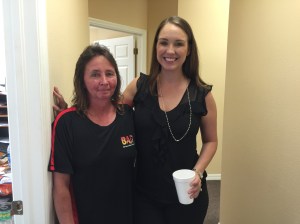
Jayme (L) Patient Chart Coordinator with Callie (R), NPC’s Office Manager

Approximately 20 staff are employed to carry out the myriad of duties required to register patients. They include Callie, their Office Manager, Kelly, a registered nurse who handles initial intake questions, Jayme who is the lead for five Patient Chart Coordinators assigned to patients alphabetically by last names, and Amy, who oversees Insurance and Financial Management. We also met  Emily, a newly appointed Research Assistant, who is currently gathering data of prior lithium use in patients.

IMG_2292

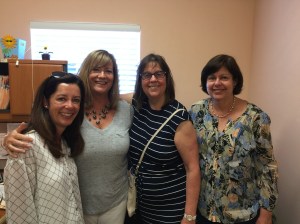
The Peeps with Kathy (2nd from left) The Surgery Scheduler!


And then there is Kathy… the person every prospective patient wants to hear from, for she is the (drum roll please) Surgery Scheduler!

We were pleasantly surprised to recognize some names of people we communicated with during our own patient registration process. It was nice to finally put a face to the name. Many of these employees have worked here for years and all are dedicated and passionate about helping patients get the answers they need to move forward towards a surgical cure. We asked what questions patients typically ask and they include…Do I have this disease? What additional tests do I need to confirm a diagnosis? The Calcium Pro App says I likely have this disease, so what do I do next ? Will this be covered by my insurance? Do you have any type of financial assistance available? Depending upon the question, then your call is directed to the correct specialist.

In addition to housing the administrative staff,  the clinic also serves local patients who walk-in for consults. While patients travel from around the world to have their parathyroidectomies performed at NPC, there are plenty of local endocrinologists who refer patients to them, so the office also serves as a typical doctor’s office as well.  The day we were visiting, Dr. Jose Lopez was the surgeon on duty, meeting with patients face-to-face to discuss their cases.

IMG_2288

Callie, Office Manager

Perhaps the biggest surprise was learning that Callie, NPC’s Office Manager, knows a whole lot about primary hyperparathyroid disease and that’s because this disease has hit close to home. There is a history of pHPT in Callie’s family, and genetic conditions (such as MEN-1 or familial hyperparathyroidism) are known rare causes of the disease. On the ride to Wesley Chapel, Callie shared her grandfather and father’s stories and then her own unique story about how she was diagnosed just prior to heading off to college. Callie is grateful that her family, given the obstacles they faced in trying to get their own diagnosis and surgical cures,  researched to find the best team of surgeons for her.  They sought out the services of NPC so that she could receive the best care possible. As a result, her story has a very different ending than their own. Callie is grateful that these experts were in her “own backyard”. When we heard Callie’s story we felt compelled to invite her to our meet-up the next day so that she could share her story with those in attendance and she graciously accepted. We have an excerpt from her story that we will be including in an upcoming blog about what transpired at our meet-up that was held at the hotel we stayed at.

———-

If you live in the Tampa area and have visited Wesley Chapel for a consult, perhaps you would like to share your experience in the comments. If you traveled from afar to have surgery, what was it like for you to become a patient from a distance?

Up next…. We meet the surgeons!  Link to the second post in our 4 part series.

AT LAST – plans for pHPT guidelines in the UK!

Screen Shot 2016-06-29 at 3.18.03 PM

Wonderful news from fellow advocates in the UK….

Sallie Powell suffered for years from the debilitating symptoms of primary hyperparathyroid disease. Subsequently, in order to save others from having a similar experience to hers, she  has been tirelessly lobbying for change in the UK and leading efforts to raise awareness to get guidelines established for primary hyperparathyroid disease. Sallie, with the help of fellow advocates, has succeeded!

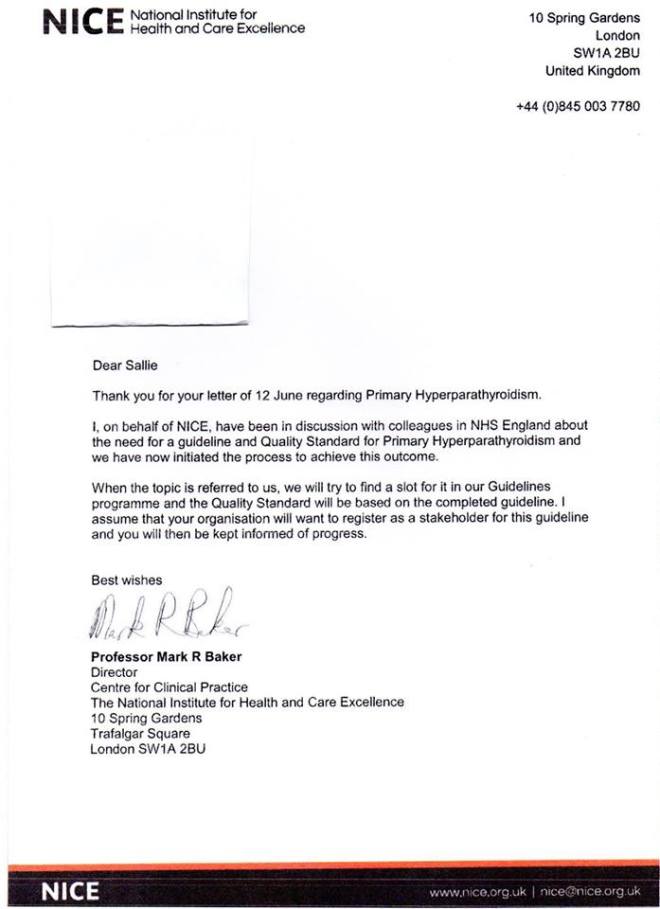
Hyperparathyroid UK Action4 Change is pleased to announce confirmation from Professor Mark Baker, Director for Centre of Clinical Practice for The National Institute of Clinical Excellence, that he has been in discussion with colleagues in NHS England about the need for guidelines and Quality Standard for Primary Hyperparathyroidism and he states that they have now initiated the process to achieve this outcome.

Moving forward their group has been invited to participate in the process as stakeholders. Sallie  informed us that she is writing to NICE today. She states, “we will endeavor to ensure the guidelines will enable doctors and endocrinologists to recognize and diagnose pHPT like never before. We have not come this far to accept flimsy guidelines.”

13516455_1736025476653512_3380333278629579152_n

While the group’s primary focus is to advocate for guidelines the group serves several other purposes and brings together people who suffer from pHPT from all around the world. Here is the group’s mission as stated on their Facebook site Hyperparathyroidsm UK Action4Change: 

Primary Hyperparathyroidism is the 3rd most common endocrine disease yet there are no regulated guidelines for diagnosis and treatment in UK for people suffering symptoms and presenting with blood calcium less than 3.

GP’s are generally unaware of the condition and believe it to be very rare. They are not aware of Normocalcemic Primary Hyperparathyroidism and the chances of diagnosis based on symptoms is even more rare leading to years of misery and very poor health in UK. This group intends to change recognition by GP’s and hospitals and make everyone aware of Hyperparathyroidism.

Members worldwide are welcome. We all need a place to come and talk and share our experiences and advice. The outside world can be very lonely when nobody has even heard of hyperparathyroidism. We intend to change that by raising awareness.

TOGETHER WE ARE STRONGER !

“Each victory, whether it be big or small. is a victory for all who have collectively suffered  from the lack of awareness or expertise required to diagnose and surgically treat primary hyperparathyroid disease.” – Parathyroid Peeps


Advocating for Improvement in Diagnosis

Advocating for Improvement in Diagnosis

IMG_2176We know that often the first major obstacle for patients who have primary hyperparathyroid disease face is getting an accurate diagnosis in a timely manner.

Why is it so difficult for patients to get diagnosed? While we have identified several reasons which we outline in our Action Plan, we intend to make one of them a topic of conversation at our Advocacy Workshop being held during the 2nd Annual Parathyroid Peeps  Retreat, November 3-6, 2016 at Miraval Resort and Spa.  A major obstacle is that …

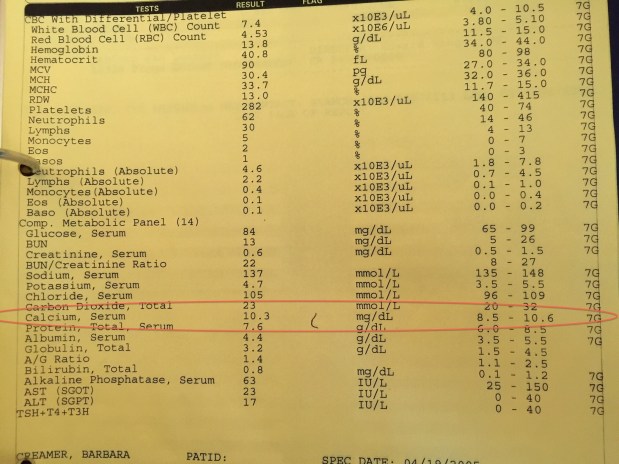
The reference ranges for normal serum blood calcium values vary from lab to lab. Many do not take into consideration the age of the patient when reporting values.

The result is that a calcium value of, let’s say, 10.5 mg/dL may be reported as being in the “normal range” for a mature adult age 30+ . While this value is normal for a teen or young adult it is NOT normal for an adult 30+. Therein lies the problem!

According to the Norman Parathyroid Center… 

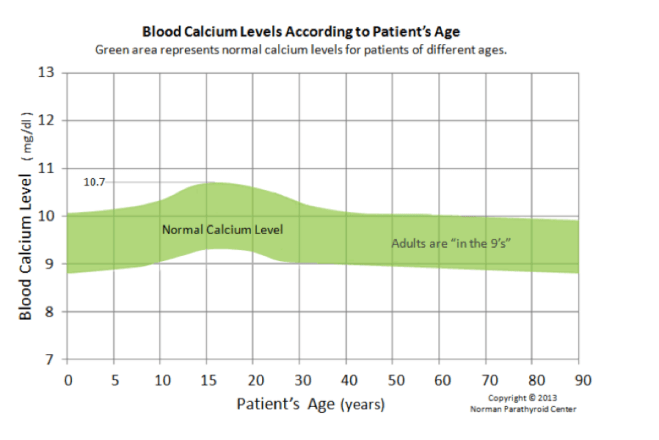
Diagnosing a person with hyperparathyroidism who is 18 years old is very different from diagnosing a person who is 65 years old. A normal, healthy teenage will have blood calcium levels that are above 10.0, and most of the time these healthy normal teenagers have calcium levels between 10.0 and 10.7 mg/dl. A patient who is 60 years old, however, should have calcium levels “in the 9’s”. A calcium level of 10.5 is normal in a person who is 21 years old, but signals the presence of a parathyroid tumor in an adult over 40 years old.

To further illustrate this on their website, the Norman Parathyroid Center provides a graph that charts normal calcium values for patients of various ages. Do you see how the normal ranges vary based on age, with values peaking in the teen years?

NPC Calcium Chart You can learn more about the problem here.

Mayo Clinic provides the following ranges for males and females by age… 

Males
1-14 years: 9.6-10.6 mg/dL
15-16 years: 9.5-10.5 mg/dL
17-18 years: 9.5-10.4 mg/dL
19-21 years: 9.3-10.3 mg/dL
> or =22 years: 8.9-10.1 mg/dL

Reference values have not been established for patients who are <12 months of age.

Females
1-11 years: 9.6-10.6 mg/dL
12-14 years: 9.5-10.4 mg/dL
15-18 years: 9.1-10.3 mg/dL
> or =19 years: 8.9-10.1 mg/dL

Reference values have not been established for patients who are <12 months of age. Learn more here.

The FDA’s Investigations Operations manual indicates…

The normal range for serum blood calcium is 9 – ll mg/dL.  See the chart here (scroll to 6th page in the pdf document).

Wow! The FDA’s range is alarming.

 The National Institute of Health site states …

Normal values range from 8.5 to 10.2 mg/dL. Normal value ranges may vary slightly among different laboratories. Some laboratories use different measurements or may test different specimens. Talk to your doctor about the meaning of your specific test results. Learn more here.

They all indicate that normal value ranges may vary among different laboratories as we have discovered as well.

Serum blood calcium is tested as part of the Comprehensive Metabolic Panel, generally ordered during a routine physical. Elevated serum blood calcium values are often the first biochemical clue that the parathyroid glands are not functioning properly. Calcium must always remain in a very tight range within normal. Therefore elevated values are often ignored because they are not clearly stated as being outside the normal range for the patient’s age on a lab report.

Patients are not aware of the problem, nor are many of their doctors. We can’t tell you how many times we have heard our followers say that they were completely unaware that for many years their calcium levels were elevated yet their doctor never mentioned it to them.

As a result of high calcium values not being flagged on patients lab reports, doctors are not alarmed and therefore do not proceed in ordering the next test to measure parathyroid hormone levels (PTH), which would help make a diagnosis.

“Whenever serum blood calcium is elevated, parathyroid hormone levels should be checked at the same time. It is their relationship to one another that is key in making an accurate diagnosis.”

A solution:  A possible solution would be for the medical professionals and laboratories to first agree on normal ranges for serum blood calcium so that they would be consistent from lab to lab. We would like to see those normal ranges then regularly reported in relation to patients’ ages. The highest normal values for serum blood calcium for a mature adult would not exceed 10.1 mg/dL.

Additionally, we believe patients would be better served, given the prevalence of primary hyperparathyroid disease (estimated at 1 in 50 women over the age of 50 by experts) if the panel, that is currently available for parathyroid disease but generally not listed on lab slips,  were more visible to create greater awareness. Calcium should always be evaluated with parathyroid hormones levels (PTH) as it is their relationship to one another that enables medical professionals to make a proper diagnosis.

How can you help?   In order to better understand the extent of the problem, we would like to enlist your help to identify labs that do not adjust their ranges for a patients’ age and/or who have values over 10.1 listed as “normal” for an adult over age 30.

What will we do? We will organize the information you provide. Our plan is to then discuss the information collected at the 2nd Annual Parathyroid Peeps retreat and strategize advocacy efforts to address this problem.

Instructions For Submitting Information:   If you would like to help, please provide the requested information below. Note that we are NOT asking for you to provide your lab values – that is irrelevant information for this project. Simply provide any and all normal reference ranges for serum blood calcium that the laboratory provided on the report you received. If you are not requesting copies of your reports you can and should do this to become your own health advocate. (As a side note: Dr. Boone is also offering a practical session on “How to Become Your Own Advocate At YOUR Next Doctor Appointment” at our Parathyroid Peeps Retreat and requesting copies of ALL lab reports is an important first step! )

Of course, if you have had lab work done at more than one lab, and they had different ranges, please provide the requested information for each lab.

You can use the Contact Form below to submit the information requested or you may post the information under comments on the related thread on Facebook.  It will save us a tremendous amount of time if you are able to help us gather this information. Thank you !

Include:

  • Your Name:
  • Name of the Laboratory
  • Normal Ranges for Serum Blood Calcium stated on the lab report you received
  • List any Normal Ranges you can find on-line from the same lab that may differ from what is stated on your lab report. Please include a link to the website

NOTE: When filling out the form it may appear as though the data your entered in a previous field “disappears”, however it is still there. Only the data being entered into the field at the moment is visible to the user however if you return to the field it is there. We are successfully receiving the information!  Don’t forget to click “SUBMIT”! If you do experience difficulties you can always e-mail the requested information to us at parathyroidpeeps@gmail.com if you prefer.

Go back

Your message has been sent

Warning
Warning
Warning

Warning.


News From May Para Peep Meet up

News From May Para Peep Meet up

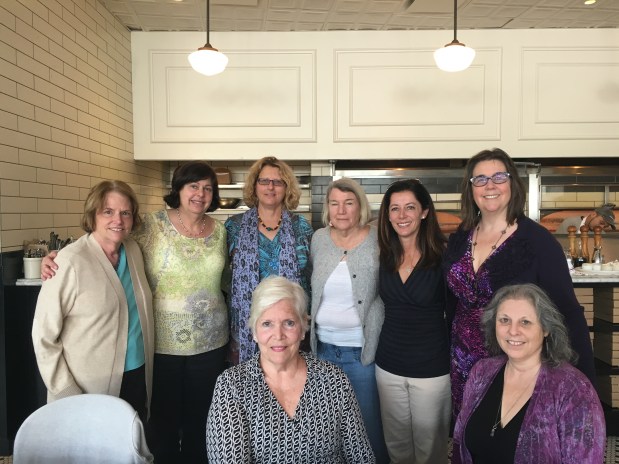
IMG_6881Nine members (eight pictured) of the San Francisco Bay Area Para-Peeps had a great time yesterday afternoon at our bi-monthly meet up at Pizza Antica in Corte Madera, California. It is always a treat to see one another and there is such a special bond and understanding that is evident given our shared struggles whether past or present.  It is amazing to see the commitment of our members who continue to attend our meet ups after being cured, in order to help others through their journeys, some traveling hours to attend. So we want to give a huge shout out to these para-troopers!

2nd ANNUAL PARATHYROID PEEP RETREAT ANNOUNCEMENT – We were eager to share details of the 2nd Annual Parathyroid Peep Retreat scheduled November 3-6, 2016 at Miraval Resort and Spa situated in the warm shade of the Santa Catalina Mountains in northern Tucson, AZ, on 400 acres of idyllic land.

Miraval is a top-rated all-inclusive destination resort and spa dedicated to helping guests live life in the moment.The property has been consistently ranked as one of the world’s top destination spas by Travel + Leisure, SpaFinder and Condé Nast Traveler.Offering an array of dynamic growth and development programs, one-of-a-kind, luxurious spa treatments, authentic, flavorful and healthful cuisine.

If you haven’t yet had an opportunity to check out all the amazing amenities and activities available at this first class resort and spa in addition to the retreat activities we have planned, we invite you to take a close look at this opportunity to create your own personal retreat and a “Life in Balance”.

Bring a friend…. we are going to have great fun together! Our peep retreat at Miraval Resort and Spa provides a haven for those who are simply interested in learning more about parathyroid disease or seeking a diagnosis, those being told to “watch and wait”, those who have persistent disease, and those who are cured. The curious, supporters, patients as well as medical and mental healthcare professionals are encouraged to take advantage of our group rate and hosted retreat activities. Link to registration information: https://wordpress.com/page/parathyroidpeeps.com/2630

Our special guest is expert surgeon Dr. Deva Boone from the Norman Parathyroid Center. In addition to offering several educational sessions she will be available for one-on- one Doc chats.  We have several other well-regarded speakers lined up and will soon be introducing them to you and providing bios. In the meantime here is a peek at the retreat schedule (subject to change):

Retreat Schedule:  

Thursday Evening -Welcome cocktail party hosted by Norman Parathyroid Center

Friday and Saturday Educational sessions –  Keynote with the Parathyroid Peeps and Dr. Deva Boone, Calcium Pro App, Managing the Daily Stress of Disease, Journaling To Document Your Physical and Emotional Health plus more

Saturday Advocacy Workshops – Be Your Own Health Advocate at your Next Doctor Appointment, Become An Advocate to Help Advance Our Mission and Write Your Story to Advocate

Friday and Saturday Afternoons –  Opportunities to schedule a one-on-one “Doc Chat” to have your parathyroid disease & thyroid questions answered by an expert endocrine surgeon

Saturday Evening – Closing meditation

Daily – Giveaways

OUR NEXT MEET UP….. IN TAMPA, FLORIDA!  Yes you read that right. We’ll be in Tampa from July 19 – 21 and will be hosting our next bi-monthly meet up there. We figured since we need to coordinate a few details for our November retreat presentations with Dr. Boone, it would also serve as an excellent opportunity to host a meet up with those of you who live in the area. We would LOVE to meet you so hope that those of you who are nearby will make an effort to attend!  Details will be forthcoming. Likewise if you have a surgery date scheduled at the Norman Parathyroid Center during the time we are there, private message us and we will make arrangements to connect.

GROUP NEWS – New members in attendance had the opportunity to hear more about the various surgical techniques available to patients given that parathyroidectomies are surgeon specific. A template of questions was passed out to help members begin to develop their own list of questions to ask their surgeons to ensure, as patients, we  understand the exact type of surgery a surgeon intends to perform. There are differences and outcomes are dependent on the predilection and experience of the surgeon! That is why our mission is to raise awareness and advocate for IMPROVEMENT in diagnosis and standards for surgical treatment. Become educated and then be smart!

Listen to our podcast – “In the Operating Room with Dr. Deva Boone”

Thank you all for your ongoing support!

Undiagnosed, my life with Hyperparathyroidism

Screen Shot 2016-04-05 at 9.55.28 AM

MEET LORA PARKS – I do silly. I do homeschool. I am a wife and Mom and I own a traveling photography business. I was ill for 2 decades from random illnesses all eventually pointing to Hyperparathyroidism.  My Christmas gift in 2015 was my life. I had a successful surgery to remove a parathyroid adenoma at the Norman Parathyroid Center after already having a failed minimally invasive surgery elsewhere. Every day since has been a new adventure.

You can contact Lora via her Facebook page and Twitter @parkspix

HERE IS LORA’S STORY…..

LISTEN TO ME!!! PLEASE!!! LISTEN TO ME!!! WHY WON’T ANYONE LISTEN TO ME!!! THERE IS REALLY SOMETHING WRONG!!!! LISTEN!!! 

YES! That’s really how i felt for years. Many, many, years. Although i actually don’t know for sure how many….and the further i get into recovery from my successful parathyroid adenoma surgery, the more i remember, the more i realize how long it really was.

Did it start in 1980 when i started getting ‘fainty’ if i didn’t eat every 3 hours? Was it in 1987 when i kept going in to the Dr. complaining that everything was making me ill and having them look at me and say i was young and ‘perfect’ and it COULD be just nervous stomach, anxiety…but really what did i have to be worried about, i was 20, right? Or was it years of feeling anxious over large crowds and loud noises, bright lights, no night driving? Or was it having to have back surgery to clean out exploded discs in my back for ‘no apparent reason’ in 1995? Was it in 2001 when i had to wear a mobile heart monitor because i was having extreme heart racing for ‘no reason’? Or was it when i started having numerous bouts with anemia for ‘no apparent reason’ in 2005 or the years of food sensitivities and asthma and heart murmors that are magically gone now? Or the years and years of infertility? What about the years of insomnia, exhaustion, and fogginess? Or the numerous mysterious trips to ER with vomiting and cramping and being told my appendix needed to come out STAT only to find out a few minutes later that everything was ‘fine’. Was it the years of the “guess which food will make you vomit” game…..I don’t even know any more! I do know that I have visited Urgent Cares/Emergency rooms in at least 5 states and British Columbia.

I have started to write down my story so many times. Anyone that has dealt with this disease can agree that when you get told over and over that you are ‘fine’ you start thinking it’s all in your head. Over the years i learned to just eat better, mostly….to choose which crowded activity i will or will not do, to drive vs. fly, but mostly i just learned to get by. I am a photographer and i try to push myself to get out on a daily basis and take my daughter to the parks, and just experience life with her. My life with this disease taught me to get creative and always pack crackers, Tums, kleenex, because we were traveling and always had to run to the restroom on the road, there were even times when i traveled with a rubbermaid tote under the seat of my car because really getting sick in the van while driving is an actual thing.

I was finally ‘diagnosed’ with a problem in 2012 by an RN who told me my calcium was 10.6. She made me promise to see an Endocrinologist and figure out what was going on. So i found one, saw he had a gorgeous website that stated that he did minimally invasive parathyroid surgery, he was local and i emailed his office immediately. The office staff was so friendly and helpful and had me send over my test results. My calcium was 10 at the time and as we were leaving for Canada for work right away they said it wasn’t ‘urgent’ and it could wait. I continued to struggle, both in Canada and Washington state, testing in both locations. If you look up Hyperparathyroidism symptoms, they are very random. But even the random ones i have had. Every.Single.One. I found the site parathyroid.com and learned so much. I learned that i was indeed ill, that it wasn’t in my head. That i needed surgery. But, surely there a local option…i hate hate hate to fly! No, i’m not afraid to fly, but i get so ill with all of the strange smells and noise and movement…can I fly? Well, unfortunately i decided i should try a local Dr. and ‘save’ myself time and money from going to Florida.

By 2015 I was so not myself. Not myself at all. I was having hand tremors, massive headaches, and my words were not coming out! My vomiting spells had gotten so bad that almost every food had the chance of setting me off. I had a huge attack with stabbing pains and vomiting tiny crystals, and I started calling Drs. again to find answers including internists and getting ultrasounds almost hoping they could find something else wrong and someone would be able to figure it out! Thankfully most of my friends and family were patient with me as I continued to get worse and worse, but still some days were ok and I could function. I got to the point of almost not driving because i was so ‘foggy’.

So, i contacted the surgeon in my local area, who performs minimally invasive parathyroidectomies, you know the one with the great website, the one that said he had all the experience….again and he said it was ‘time’. They set me up for countless more tests, including 24 hour urine catch, (EWWWWW) nuclear tests, etc. yay i was finally going to be done and better, right? The surgery day came. (April 2015)I went to the hospital in the am, met the staff, and woke up about 4 hours later by the Dr. who very nicely told me that they ‘couldn’t get it”. WTF? All of this for nothing? Yep. Not only could they not get to the adenoma, i had no memory of what had happened after surgery for the first 16 hours or so, and the meds that they had given me made me vomit almost constantly and have vertigo for almost 3 days straight. When i called the Dr. office they gave me a RX for nausea meds and I was told that this sometimes happens. I went in for my recheck after surgery and they told me that the hospital had run out of ‘blue dye’ and this would have been the other way they could have gotten to the adenoma. HUH?

Fast forward and i’m now feeling even worse than before surgery! When my brain finally clears enough to think and process, i went back to the parathyroid.com website and clicked on the area where it says, BECOME OUR PATIENT. I filled everything out. I knew there would be an even larger out of pocket cost because i let another surgeon touch me first…..i didn’t care. I knew that i had to fly to Florida……i didn’t care. I knew they would be saving my life.

When i got the first phone call from the ladies at the Norman Parathyroid Center, i was thrilled. I knew they had heard it all before, i knew that I didn’t need to explain anything to them, that they would get all of my medical records and make a plan. I patiently awaited the call from the man. (well, you know…i tried to be patient) When Dr. Norman called, i almost cried! It was really like getting a phone call from a long-lost friend. I knew that he was the answer. I knew that he could ‘fix’ me.

My husband and i flew in Tampa, stayed right downtown, walked everywhere. We also  rented a car because we wanted to further explore. When we got to the hospital, we met everyone! It was amazing, so welcoming. They talked to me the entire way, and each Dr. stopped to say hi, and see if we understood everything, make sure we were all on the same ‘page’. Yes, since it was a second surgery I knew that the Drs. had to work with scar tissue, and it might take longer, or maybe they wouldn’t be able to help me but I also knew that this was my only chance. No surprises is huge when your brain is super messed up! My husband patiently waited for me and off we went…..

The surgery went great, I was told that there was almost no scar tissue and they were in and out and done in no time! I was handed a photo that says my trouble maker was testing at over 900 prior to removing it.I was so completely overwhelmed after I saw my picture of the adenoma ‘punk’ that tortured me for years that i was crying and asked to get my picture with Dr. Norman, which i posted to my work Instagram account for the entire world to see. We went back to the hotel after surgery, i took a little nap, and seriously, when i woke up it was like a switch was turned back on! I was ‘here’ again.

After resting and eating lunch, YAY, hungry! I asked my husband to take me to the beach! We drove over to Clear Water and walked and talked on the beach. The water was crystal clear, just perfect. We spent the next two days in Florida having long conversations, and I could follow along and not drift away! We walked and walked and I even danced at the winter celebration in downtown Tampa.

It has now been over 2 months since my surgery, i have almost no tired days…. i am sleeping, i’m hungry, and my hair is growing in! I have had no random pains, no kidney stones, no heart racing, no fogginess……every day is better than the next! I now know that my calcium should have been a flag to get more tests, not just to accept that 1. Maybe I just have a high count all the time…. or 2. That we should just have a ‘wait and see’ approach. I now know that I will do everything I possibly can to help people understand that it’s ok to ask for help, find someone to listen. It’s really hard to hear there is nothing wrong with you when you know there is. It is horrible to have to live with an illness that people don’t understand so they think you are making it up. My family and friends didn’t understand because I would go for long periods of time feeling ‘normal’, and able to do pretty much anything I wanted to do, and then I would have a spell for a few days and not able to do anything. The truth is, that I wanted to do EVERYTHING! And now I can. 😉

The first pic is as we are flying to Florida. (look at how exhausted I am!) The second, right after surgery with Dr. Norman (have I told you I love him???) and the third photo is the same day, with my husband, celebrating my new life!

Hyperparathyroid Disease… a Silent Killer

Many of you may have already heard the news that comedian Garry Shandling passed away suddenly on March 24, 2016. We  want to extend our condolences to his family and friends. We will all miss the humor of this legendary entertainer. Learn more about Garry Shandling’s career here: http://www.npr.org/2016/03/25/471795179/how-heartbreak-helped-garry-shandling-find-his-comedic-voice

It is reported that Garry referred to having hyperparathyroidism and described some of the symptoms of pHPT in recent clips and conversation, so there is speculation that he suffered from the disease.

http://radaronline.com/celebrity-news/garry-shandling-dead-secret-sickness-clues/

http://www.usmagazine.com/celebrity-news/news/garry-shandling-revealed-health-issue-during-final-appearance-watch-w200206

http://www.nydailynews.com/entertainment/tv/garry-shandling-acclaimed-comic-actor-dead-66-article-1.2576782

What we do know based on information received from the LA coroners office this morning by fellow Health Advocate, Heather Fraser is that…

1. They are still investigating Mr. Shandling’s cause of death.
2. They are aware that he suffered from parathyroid disease.
3. They are waiting on toxicology reports.
4. They have his medical file and are in communication with his doctors.
5. When they finish their investigation they will release an official cause of death.

As it has yet to be determined whether his heart attack was directly related to pHPT we must await forthcoming reports.

However, we do know that untreated pHPT and the “wait and see” model of care that many doctors ascribe to can lead to many serious health problems including heart attacks. Learn more here: http://www.parathyroid.com/parathyroid-symptoms.htm

Patients with primary hyperparathyroid disease have a shortened life expectancy. According to the American Association of Endocrine Surgeons

Large population-based studies show that patients with primary hyperparathyroidism appear to be at risk for premature death. Most of these deaths were due to cardiovascular disease or cancer. This data included both patients with and without symptoms. For example, in a study of 33,346 patients with primary hyperparathyroidism over an 11 year period, there was between a 20% and 58% higher mortality (chance of dying), often of cardiovascular disease, in primary hyperparathyroidism patients compared to patients with normal calcium levels.

Read full text here: http://endocrinediseases.org/parathyroid/symptoms_life_expectancy.shtml

As patients who have been effected by this disease, we are working to educate the public so that..

  • Patients as well as medical and mental healthcare professionals understand the symptoms and biochemical presentations of the disease so that diagnosis is timely.
  • Medical professionals understand that the “wait and see” model of care is inadequate and leads to more serious health issues.
  • Patients understand that currently surgical techniques vary dramatically. Change is needed to ensure the most advanced techniques are the standard of care.

The good news is that conditions that effect the heart that result from high calcium and parathyroid hormone levels can significantly, if not completely improve, once a patient is surgically cured by the removal of their non-cancerous adenoma(s) .  Read more here: http://endocrinediseases.org/parathyroid/symptoms_cardiovascular.shtml

We will keep you posted as additional information becomes available.


Lots to Taco’bout at Para Peep Meet-up

Lots to Taco’bout at Para Peep Meet-up

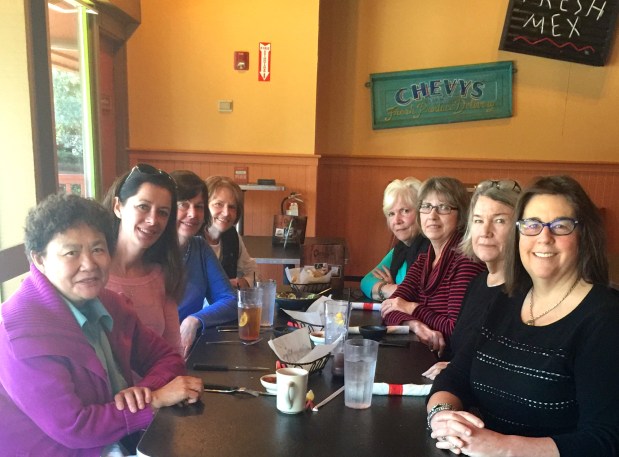
IMG_1938This past week on a beautiful, sunny, blue-sky afternoon, with a view of the San Francisco Bay in the background, we held our bi-monthly Para Peeps meet-up at Chevy’s in Emeryville, CA. Our little group has now grown to 15 and we were please to have 8 of these members in attendance this time! At one point we all realized that this was our first time ever being surrounded by so many with “peep” scars. We laughed as we all pointed and showed off ours, noting that they are nearly invisible. For some of us years have passed since we had our surgeries, others months, while one member just got back from traveling across the country for surgery less than a week ago. She was in good spirits and was feeling energetic, happy to be moving forward towards improved health.

We updated everyone as to our advocacy efforts to date and then turned it over to the group to tell us how we can further our mission of educating others. Within minutes ideas were generated. Several members volunteered to either share their stories as a guest blogger or to record a patient podcast with us. Those who had connections with active community groups offered to use their networks to help us book speaking engagements so that we can continue to educate the public. We are so grateful to have met all of these incredible women who are willing to go out of their comfort zones to share their stories publicly in the future to help others with their journeys. Stay tuned for more stories and events.

IMG_1936

Normocalcemic hyperparathyroidism baffles doctors

9/29/2017 – STORY UPDATE

After my first parathyroid surgery on February 16, 2016 , my PTH remained elevated and calcium remained lower , but normal. I had given myself a year in hopes that my PTH would lower and things would even out. Once I passed a year, I had decided to agree to a subtotal parathyroidectomy with my surgeon from before. My second operation was June 6th, 2017. I was given the option to stay in the hospital overnight, but felt that I was stable enough to go home and was discharged that evening. We discussed symptoms of hypocalcemia and that I was immediately to go to the emergency department if symptoms developed.

The morning of June 8th I woke up and noticed that my arms felt heavy and numb and decided to go back to bed in hopes that symptoms would improve. When I woke up feeling worse I decided to call my Dr’s office and headed to the emergency room. By the time I got to the hospital my face and entire body felt numb, my speech was slurred, everything felt heavy. I was scared that I was having a stroke. I was taken back right away and given blood tests that showed a calcium level of 6.7. I was admitted up to the surgical floor and started on IV fluids, calcium and magnesium.

About three days later I was stable enough to be off the IV but remained monitored until my numbers were stable enough to be sent home. I was put on vitamin D, magnesium, calcitrol, and tums, with dosages adjusted according to labs. There is a chance my remaining gland will not recover and I will need to continue on those medications the rest of my life and may also need natpara injections. At this point we just wait and see, but at my most recent endocrine appointment my Dr. said he felt the damage is permanent .There was a decrease in kidney function when I was put on higher dosages of calcium so I am hoping this can be leveled out before permanent kidney damage occurs.

I am still developing stones rather quickly and underwent my eighth stone procedure in September. I am following up with urology, nephrology, and endocrinology regularly, but it feels like each appointment ends with more questions than answers. I am learning to adjust to life with hypocalcemia/hypoparathyroidism, but it has been hard to get used to this new normal.

GUEST BLOGGER, BRITTANY’S STORY….

My parathyroid journey started two years ago at the age of twenty-six. I was in the third trimester of my third pregnancy when I was stricken with severe back pain. I thought it was just a pulled muscle, but wanted to be evaluated to make sure that the baby and I were okay. I went to my local walk-in clinic where they ran a urine test that came back with a large amount of blood. The doctor told me that it was most likely a kidney stone and sent me for an ultrasound to confirm. As well as having several stones, I was also diagnosed with a condition called medullary sponge kidney, also known as Cacchi–Ricci disease. It is a congenital disorder of the kidneys characterized by cystic dilatation of the collecting tubules in one or both kidneys. Individuals with medullary sponge kidney are at increased risk for kidney stones and urinary tract infection. I was scheduled to meet with an urologist and nephrologist to discuss these findings. Because one of my stones was too large to pass naturally I was scheduled for a lithotripsy. I had the procedure six weeks after my daughter was born. Sadly the lithotripsy did not break the stone down enough to pass. As a result I required a second surgery to go in and retrieve the stone.

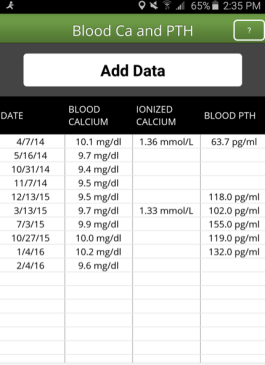
Despite dietary changes and medications I continued to form kidney stones at an alarming rate. My stones were analyzed and found to be composed of mostly phosphorus. I did my best to manage things, believing that this was going to be my life – contending with medullary sponge kidney and the resulting stones. I educated myself as much as possible. It was when I joined a kidney stone support group on Facebook that someone suggested having my parathyroid hormone (PTH) and serum blood calcium levels checked to test for primary hyperparathyroidism (pHPT). Little did I know, but my previous nephrologist had run these tests, but didn’t inform me. I learned that the first time my labs were drawn my calcium was 10.1 mg/dL and my PTH was 63.7 pg/mL.

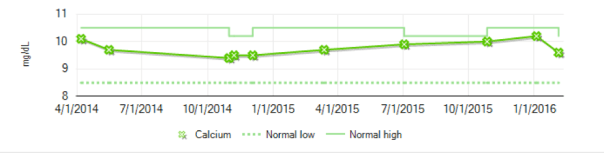
As I did not feel comfortable with this first nephrologist, I asked to switch to a different provider in the department. This was the best decision I could have made, because the second nephrologist I was placed with genuinely cared and listened to my concerns regarding hyperparathyroidism being a possibility, even though these initial tests indicated everything was normal. She began running blood and urine calcium and PTH labs every three months, as it was standard procedure to run these test for kidney stone maintenance appointments. My blood calcium was always normal, never higher than 10.2 mg/dL. This lab’s normal range for calcium was 8.5 mg/dL – 10.5 mg/dL. While adults 30+ should suspect and rule out pHPT as the root cause if values are over 10.1, it might be normal for an adult like me in their 20’s to have a value as high as 10.5, so my 10.2 was not alarming. Here is graph of my calcium blood tests: 

B.Kenyon Calcium Chart

My PTH on the other hand, aside from that initial draw, continued to come back over 100 pg/mL. The normal range for PTH at this lab starting November 2015 was 14 -95 pg/mL. Prior to that the range was 14 – 72 pg/mL. As a side note, I am not sure why they changed their values, but I feel it will make diagnosis even more difficult for others. While Vitamin D was tested as well, it was not done consistently. Here is a graph of my PTH levels:

B. Kenyon PTH chart

At my request, on two occasions,  my doctor ordered Ionized Calcium. The first time it was 1.36 mmol/L and the next time 1.33 mmol/L . The normal range at this lab was 1.12 to 1.32 mmol/L. 

At the same time I was also seeing my GP and a gastroenterologist that I was referred to for nausea and I also told them that I thought I had hyperparathyroidism. Both told me that my calcium was not high enough to have it. My nephrologist however admitted to being confused by these numbers and suggested that we have an endocrinologist look at my case.

The endocrinologist reviewed my labs and said, “There’s obviously something wrong. I just don’t know what it is.” He put me on 150,000 iu’s of Vitamin D a week split between three 50,000 iu capsules that I took on M/W/F, ordered a neck ultrasound and scheduled a follow-up in three months. I felt terrible on the Vitamin D, but continued to take it until my follow-up appointment. At the follow-up we went over my labs, and for the first time my urine calcium came back high. The last reading was 176 mg, however this time it was 482 mg. Normal range for 24-hour urine calcium is 50 – 250 mg. at this lab indicating hypercalceuria.  Blood calcium came back higher, but again, still within normal range. An endocrinologist performed the ultrasound however he was not the one following my case. The ultrasound showed swollen lymph nodes but the parathyroid glands were not located. I knew that ultrasounds were not very reliable in locating parathyroid adenomas, so I was hopeful that they would send me for a sestamibi scan, as the endocrinologist I was seeing said a positive scan or blood calcium of 11.5 was required for referral to surgery.So I asked the endocrinologist that performed my ultrasound for more comprehensive imaging, but was told it was not necessary. Instead I was told to follow-up again in six months.

In the meantime I was prescribed 25mg of hydrochlorothiazide, in an attempt to lower my urine calcium, despite already being on a different blood pressure medication. I did not feel comfortable taking the hydrochlorothiazide in that large of a dose without being monitored. I had a follow-up with my nephrologist a couple weeks after that and discussed my concerns with her. She lowered the dosage and took me off of the other blood pressure medication. While going over my numbers she noticed the elevated urine calcium and said, “I’m fairly certain you have hyperparathyroidism”. She ordered a sestamibi scan and follow-up as quickly as she could. An adenoma was located on the left side, and I was finally sent to see the General Surgeon who specializes in Vascular and Endocrine surgeries, to schedule a parathyroidectomy. I had my surgery February 16, 2016 and am so thankful my nephrologist cared as much as she did and listened to my concerns. Since I presented as normocalcemic, which means my blood calcium was never high, it was extremely difficult getting a diagnosis because many in the medical community are baffled by this biochemical presentation. Through my research I learned that patients who present as normocalcemic frequently suffer with kidney stones because the kidneys are doing their best to try to rid the body of the excess calcium. It is also quite typical for a normocalcemic patient to have PTH over 100.

I am still diagnosed with sponge kidney and am told there is no cure, just management of symptoms. I also have nephrocalcinosis, My urologist has stated that there is nothing he can do surgically to remove the calcium deposits, but has been great about getting stones out before they become problematic. I have had a total of five kidney stone procedures to date. I believe there is a link between pHPT and the kidney issues I have experienced. I will continue to follow-up with my nephrologist and urologist bi-annually. I believe that they anticipate these problems will resolve, but only time will tell.

Hyperparathyroidism has stolen two years of my life, and who knows how much longer it would have been if I hadn’t researched and found www.parathyroid.com among other sites, as well as connected with others in various on-line support groups and forums to become educated.

B, Keyon Calcium Pro App screenshotI used the Calcium Pro app ® that helps patients become their own health advocate. To the right is a screen shot of the values I entered.  

Since having surgery, my brain fog has lifted, and my memory has gotten much better. I’m also feeling a lot happier and more energetic. I credit the wonderful nephrologist who did everything she could to help, instead of just brushing me off like other providers had done because my calcium wasn’t high. It took a great deal of persistence on my part to get diagnosed and I’m hoping my story raises awareness and helps others like me who are struggling to get diagnosed because their doctors don’t understand the normocalcemic biochemical presentation.

B. Kenyon photo

ABOUT BRITTANY KENYON: Brittany is a stay-at home mom with children ages 5, 4 and 2. She graduated with honors this past December with an Associate Degree in Medical Administration. Brittany also holds Medical Reception and Medical Office Assistant diplomas. Brittany believes her coursework helped a lot in her understanding of things, especially medical terminology. Brittany invites you to follow her on twitter.com/britmasterflash and/or contact her at hello.waldorf@gmail.com.

Twitter – Let’s do this!

In order to advance our collective mission to raise awareness and advocate for improvement in diagnosis and standards for surgical treatment we are asking you to consider joining  Twitter to help us accomplish our goals together.

Screen Shot 2016-01-28 at 6.35.59 PMThere are several issues that we would like to shed light on through this social media platform. Below are just a few examples of the issues we would like to raise awareness about by tweeting. We believe that our efforts would be far more effective with your help.

1) We all know that one reason parathyroid disease goes undiagnosed for far too many years is because the lab values for calcium can vary dramatically from lab to lab. Many do not take into consideration the age of the person and set their values to reflect an average, thus often putting those over 30 who suffer from primary hyperparathyroid disease with calcium values of 10.4 in the “normal” range. We would like to identify and tag  laboratories in tweets to raise awareness and advocate for change.

2) Patient experience tells us that the American Association of Endocrine Surgeons guidelines for primary hyperparathyroid disease need to be improved to better serve us. Let’s be positioned to take action.

3) As we understand the Australia Healthcare System may be making some unfortunate decisions for those suffering from pHPT.  On another front, the UK has their own unique issues to address in order to improve diagnosis and standards. Wouldn’t it be wise for all of us to be positioned to help our friends across the world who are fighting similar issues?

4) Along more general lines, we can and will create awareness of the difficulties pHPT patients face and the needless suffering and deterioration of health that occurs as a result of medical professionals being uninformed (again tagging and tweeting to key individuals who may be in a position to move things forward).

Therefore, we encourage each and everyone of you to consider creating a Twitter account (if you don’t already have one) so that together we can help inform and educate to effect change.

PLEASE JOIN US!

Once you create your account please follow us on Twitter at the handle @parathyroidpeep (no “s” on the end) That way you can easily check out our newest tweets on your homepage and just like Facebook, like and retweet them. It really is easy to catch on. Don’t be afraid to try.

Also follow Hyperparathyroid UK Action4Change at the handle @spsallie.

Let’s do this together!

Here are links to help you get started…

Tips for creating your Twitter Account: https://support.twitter.com/articles/100990?lang=en

How to Use Twitter: https://support.twitter.com/articles/215585?lang=en


Should calcium be adjusted for albumin?

Question from a Parathyroid Peep Follower: 

I am entering my calcium values into the Calcium Pro App. Should I include albumin corrected calcium values? 

Here is the response we received from Dr. Jim Norman, founder of the Norman Parathyroid Center and the Calcium Pro App:

No, do not include albumin-corrected calcium levels.

This correction is ONLY used when people have severe protein malnutrition (typically about to die from a bad cancer and have lost a lot of weight, or have been hospitalized for weeks (not days) with bad health problems such as acute pancreatitis).

The correction should only be used to INCREASE the calcium (in patients with low serum protein and low serum albumin–which is a major blood protein). A low albumin will falsely lower the calcium, so doing a correction will increase the “actual” level of calcium. The opposite is NOT true. A high albumin should never be used to lower the measured serum calcium.

Thus, this “calculated” number should only be used on people who have chronic illness and are hospitalized and very sick. It will serve to INCREASE the serum calcium level (whatever the number is, it will make it higher). This correction is never used to make calcium levels lower, and it should never be used on ambulatory otherwise “healthy” folks.

Summary… in very sick people (hospitalized-for weeks sick) the measured calcium level should be INCREASED by taking account for a low body protein (albumin) level. That is the ONLY time this correction is used.

Additionally, we have learned in the podcast  – URINE, SERUM & IONIZED CALCIUM TESTS, VITAMIN D AND PURPOSE/VALUE OF SCANS AND IMAGING Posted: May 14, 2015 (22 minutes) with Dr Norman that ionized calcium is considered the “gold standard” for measuring calcium values. It is often ordered as the follow-up test when serum calcium is noted as being high. Calcium and parathyroid hormone levels should always be evaluated together and in relationship to one another.  Primary hyperparathyroid disease is diagnosed biochemically – through blood work. Therefore, obtaining a patients urine calcium is only of value in unique situations which is also discussed in the podcast.

Scans are not a proper diagnostic tool as many adenomas will simply NOT appear on a scan or image. Many surgeons however insist on seeing the adenoma on a scan or image prior to doing a surgery. This may be indicative that the surgeon is skilled enough to perform a focused surgery and that they do not intend to “explore”. Be aware that exploring creates scar tissue and can severely complicate matters for experts if a second surgery is required because a second adenoma was missed, or a perfectly good gland was removed inadvertently by an inexperienced surgeon instead of the offending adenoma. We offer a list of questions you may want to ask to help ensure the surgeon you select has the proper level of expertise to remove your parathyroid adenoma(s). Become informed!