It’s a no brainer…High Calcium is BAD!

It’s a no brainer…High Calcium is BAD!

Flash back…..

My husband and I were on our way to see a movie and for him, Milk Duds are an essential part of the movie-going experience. So I suggested that we stop at a convenience store on our way that sold super sized cartons. I knew that my guy would be a happy camper with a box (or two) stashed in my purse for later consumption! “I’ll be right back – no need for us to both get out, you can just stay in the car.” I chimed.

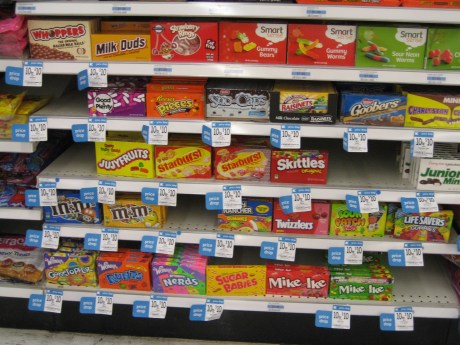
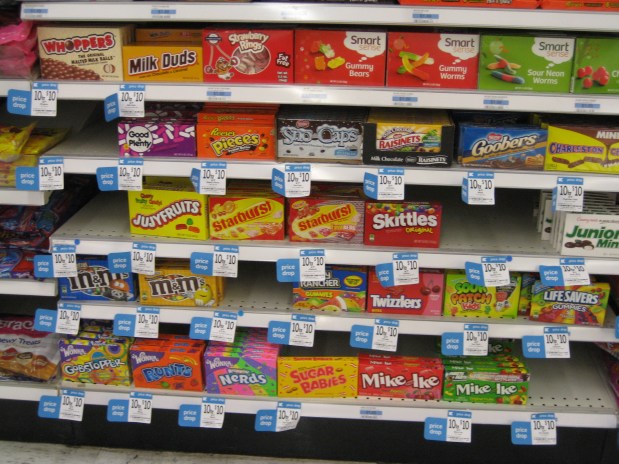
It was easy to find the rack of candy that spanned a full aisle in the small store. I scanned the shelves and perused all the different shapes, sizes, colors and names looking for the familiar golden-colored box.

kmart-halloween-030

Normally I am able to easily scan shelves quickly and find the product I am looking for – no problem. In fact it is so automatic, that I just do it without having to think at all.   However this time things were different!  I simply could not find what I was looking for no matter how hard I tried. I was really confused. “Focus”, I thought to myself. I couldn’t help but wonder though what was wrong with me! Why was it SO difficult to distinguish one type of candy from another? I felt like I couldn’t “see”. Like something heavy was  hanging over my eyes.

It wasn’t that I couldn’t see though. My vision was perfectly clear.  The thought crossed my mind that I must be reacting to the fluorescent lights in the store. “Yes, that must be the problem” I concluded, trying to soothe my ever-increasing anxiety. I looked up to check out the lights.  I shook my head to try to “see” straight. I had to remind myself to relax, that there was no need to panic. I was just picking out candy for God’s sake. I can do this. Get a grip!

After what seemed like eternity, I finally spotted what I was looking for and made my way to the cash register to pay and quickly escape, happy to once again be outside in the fresh air, sunlight and away from those cluttered, confusing shelves and bright lights.

This experience left me feeling a bit frightened. Little did I know that this was only the first of many uncomfortable and strange physical sensations that I would experience as a result of  having high blood calcium from one of my four parathyroid glands becoming a non-cancerous adenoma ( you can learn more about the function of the parathyroid glands HERE and about how calcium affects the brain on parathyroid.com’s blog post HERE.

After multiple episodes similar to this one, I realized that it had nothing to do with my eye-site or the bright lights, but rather it was my inability to process the details of what I was seeing. If you read our website you will learn that brain fog is just one of many symptoms caused by primary hyperparathyroid disease and according to experts,  it is one commonly reported by patients who suffer from the disease.

brain.fog.perry


Do you suffer from brain fog or any of the other debilitating symptoms associated with primary hyperparathyroid disease? Learn more on this website to help ensure that you, or someone you love, does not go undiagnosed and suffer needlessly. If you have questions about our experiences, please feel free to contact us. 


2015 in review

The WordPress.com stats prepared a 2015 annual report for our blog on http://www.parathyroidpeeps.com and we are excited to share it with all of you! We invite you to take a peek to see how our message has traveled around the world in just one short year! We wish all our followers near and far much happiness and good health in the coming year!

Here’s an excerpt:

The concert hall at the Sydney Opera House holds 2,700 people. This blog was viewed about 24,000 times in 2015. If it were a concert at Sydney Opera House, it would take about 9 sold-out performances for that many people to see it.

Click here to see the complete report.

Stronger Together

In a recent blog post you met Sallie Powell, a mover and shaker among patients with primary hyperparathyroid disease in the UK and beyond. She  founded and actively manages the closed FB page Hyperparathyroid UK Action4Change that provides support to those trying to get diagnosed and/or find a competent surgeon.  Her most recent endeavor has been to develop an educational two page tri-fold that patients can share with medical professionals in the UK who are not familiar with the the disease and/or may not understand the nuances of diagnosis and that surgery is the cure.

You can review the pamphlet Sallie created on our Resource Page under Patient Support & Services. 

We are sharing this pamphlet because we believe that together we are stronger. We are grateful when there are opportunities to forge relationships that advance our collective mission which unites rather than divides. As we look to the New Year, let’s each commit to doing what we can to raise awareness and advocate for improvement in diagnosis and standards for surgical treatment locally and globally.

We are excited to soon share some of our goals for next year with you in a future blog post.

In solidarity with all who have suffered needlessly,

The Parathryoid Peeps

bandaid.perry.7.15


November Peep Meet-up

What a fabulous meet-up we had this past Wednesday

Meet the Peeps… First we met Barbara J., who travelled 3 +  hours from Nevada in order to attend our meet-up in the San Francisco Bay Area. What a trooper to drive that far!   It was really wonderful getting to know her and hearing how much better she is already feeling after having her surgery in September. We are so happy that she found our website, that it provided her with information that helped her move forward with confidence and greater ease, and that she reached out to us to let us know this, all after the fact.

Next we got an update from Janet. When Janet confided to a close friend that she received a diagnosis of primary hyperparathyroid disease, after being utterly confused by her symptoms for far too many years, this friend, who is familiar with our pHPT advocacy project, exclaimed, “I know exactly who you need to meet!” After hearing our stories and exploring all her options, Janet self-referred for surgery. Now five weeks post op, Janet couldn’t be happier with the results.

Everyone present was so very grateful for improved mental clarity and health following surgery. However, we also know that sometimes other health conditions,unrelated to primary hyperparthyroid disease, need to be unravelled following surgery. For some of us these conditions existed before the pHPT started, autoimmune diseases for example. Others may have developed concurrently as a result of the pHPT (osteoporosis, stones) or independently. In other cases the problem is not evident until after recovering from surgery, for example Hashimoto’s thyroiditis is later diagnosed. So conversations turned to these topics, along with discussions related to gluten sensitivity and diet. Two and a half hours simply flew by.

We could have talked for hours, BUT we didn’t want to leave all of you out! This is why we have plans to continue our conversation with PATIENT PODCASTS… 

We are so excited to announce that these bright, interesting and resilient women will be featured on the first of many patient podcasts we intend to produce. We can’t wait for you to hear their stories! Stay tuned…

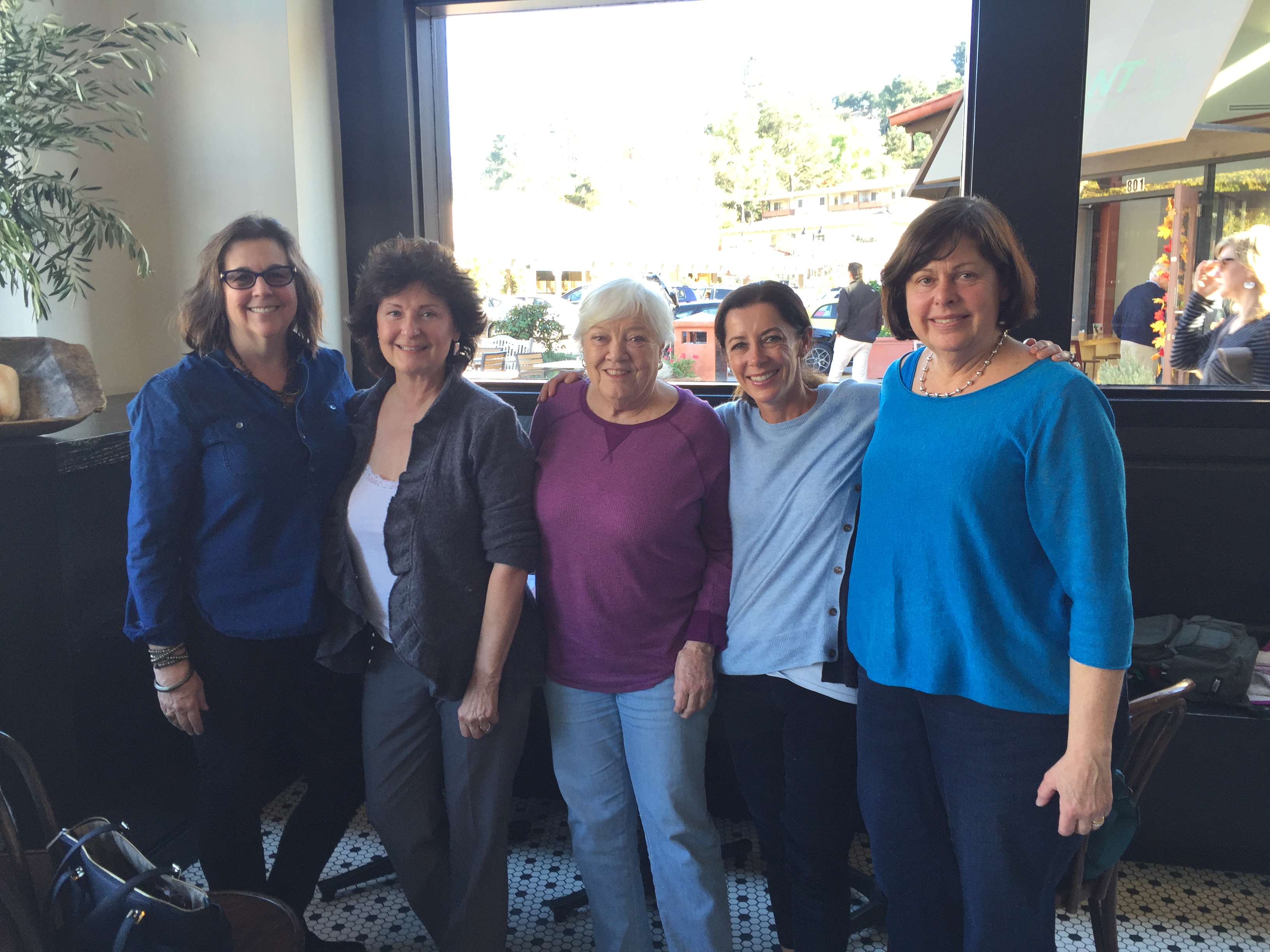
IMG_1702

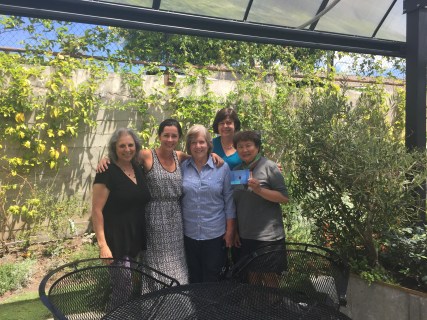
Left to Right : Barbara C., Janet, Barbara J., Sophie and Joyce  Pizza Antica, Mill Valley, California

What a difference a year makes…

Today we were notified on Facebook that the three of us have been “friends” for one year.  We can’t believe how quickly the year has passed and are in great awe of all that has been accomplished. Wow!

Our Mission 

One year ago today we had our first meet-up. Stories were shared, symptoms were compared, problems we experienced in trying to get diagnosed were discussed and before we knew it, the three of us were enthusiastically hatching the idea to publicly share our stories to raise awareness of primary hyperparathyroid disease and advocate for improvement in diagnosis as well as standards for surgical treatment.

We Educate

We now have this website and blog as a forum to share patient stories that has had over 8175 visitors, with 20,900 views from 69 countries. Parathyroid Peeps are active on social media with both a Facebook page and Twitter Account. We have our cute mascot Perry designed by Amy Shimm Noveshen whose mother also suffered from parathyroid disease.  We have successfully produced six podcasts with the expert surgeons from the Norman Parathyroid Center and are exceedingly grateful for the time they have dedicated to producing these with us. We are excited that additional podcasts will be forthcoming in the new year!

We Partner

Given that primary hyperparathyroid disease causes bone deterioration over time, we partnered with the Osteoporosis Community for a couple of projects. We had a two-part interview/article published on-line working with Pam Flores from Health Central and were guests on a live webinar with Dr, Lani Simpson DC, CCD, a certified clinical bone densitometrist and renowned bone health expert and author of No-Nonsense Bone Health Guide.

parachute.perry.7.15 We Like Meeting YOU 

We’ve met and talked with others who have suffered from parathyroid disease at our 3 Peep meet-ups as well as through phone and Skype session. Of course we have answered many people’s questions via e-mail and messaging. Meeting and talking with so many wonderful souls, has been exceptionally rewarding. We are grateful for the positive relationship that has been established with Sallie Powell who heads up Hyperparathyroid UK Action for Change and look forward to collaborating further to advance our missions.

What’s Next?  Bone Girls Club Meet-up & Escape with MORE magazine 

In just three short weeks, from November 5-8, we will be in Tucson Arizona for a “girls getaway” to  attend Escape with MORE magazine, at Miraval Resort and Spa. During this trip we will have two unique opportunities to share information about primary hyperparathyroid disease. We are pleased to be meeting up with the Bone Girls Club shortly after landing,  as it is a priority for us to connect with those who suffer from osteoporosis and those supporting them. It is important for patients to be aware that parathyroid disease can sometimes be the root cause of osteoporosis and we want to make sure those suffering have accurate information to rule out this possibility. We will have a second opportunity to present information at Miraval, and will be doing that with Dr. Deva Boone, one of the surgeons from the Norman Pararthyroid Center. We are super excited for this next great adventure and opportunity to educate, and will post updates, photos and short videos throughout our stay on Parathyroid Peeps Facebook page!

And to those of you still suffering and waiting for a diagnosis or surgery, please know that each day we think of you and send good thoughts your way.

The Parathyroid Peeps

(Authored by Barbara)

Sallie’s Parathyroid Story…

sallie1

Sallie Powell resides in the UK

ABOUT SALLIE POWELL Despite a childhood blighted with 3 marriages, numerous house moves, schools, and abuse; Sallie has always remained positive; believing life’s challenges made her stronger. At 18, Sallie backpacked around Australia, New Zealand and Hawaii – she was in complete control of her life and nothing could beat her. Even at age 26 a diagnosis of hypothyroidism didn’t slow her down. However, at age 32 after a mysterious illness, she woke up deaf one morning. She has been told this was a result of the nerve ends dying.  This was the start of a long uphill battle to regain her health, with a parathyroidectomy at age 44 being the last in a series of 5 major surgeries. Primary Hyperparathyroidism DID beat her, but in the end, she fought back and won.

Now Sallie’s mission is to increase awareness of hyperparathyroidism and let people know they are not alone with their fight for a diagnosis. Support and guidance are available in an on-line FB support group she started – Hyperparathyroid UK Action4Change.  Sallie has been campaigning for the UK Guidelines for diagnosis and treatment of primary hyperparathyroid disease to be updated.  Furthermore, Sallie is working on book of poems, anecdotes and short stories she has written, as well as collected from others, who have also suffered needlessly. It is our privilege to collaborate with Sallie. 

SALLIE’S STORY – 23 August 2015

After suffering the loss of 70 % of my hearing suddenly at the age of 33 and consequently having to leave my job as a technical administrator, sell my home and move to the City of Derby with my young son in 2000; when I was diagnosed with depression I logically assumed it was because of the traumatic transition in my life the previous 18 months. My relationship had broken down and I felt pretty low. I was prescribed Seroxat (paroxetine hydrochloride). I was also prescribed Ranitidine; a histamine 2 blocker to reduce stomach acid as I had also began to experience chronic heartburn. I had studied bookkeeping for a year and began to study Art, Design & Photography over 4 years. I took a year out from my studies in 2002 due to worsening depression and anxiety. I had also developed asthma due to black mould in my home and was rehoused.

When my course finished in July 2004, I attended a short business course, then set up a small photography studio in November 2004.  I specialized in wedding photography and maintained an extremely busy schedule; in 14 months I photographed 49 weddings. 2005 passed in a blur. In 2006, I began to experience pains in my right knee. I thought it was an occupational hazard. It became so bad I couldn’t walk downstairs or get out of my car and I struggled to stand from a kneeling position; so I approached my doctors. While no root cause could be found, the pain became nearly constant and I developed a limp.

Around the same time, I experienced a medical emergency. I had to call 999 one evening due to crushing chest pains and paramedics rushed me to hospital suspecting a heart attack. I was released hours later after the pain subsided. I wasn’t informed that my blood calcium was 2.91. Note that normal range in the UK is designated as 2.25-2.5.  I began to suffer extreme fatigue during the day; I was 38 and told, “Well you are nearly 40”. I kept asking myself, whatever happened to “life begins at 40?” Maybe it was sarcasm.

Following an arthroscopy in April 2007, I began to lose enthusiasm for my business. By October my fatigue was accompanied by a loss of confidence after I had accidently deleted a memory card of unsaved wedding photographs. I was distraught and took a part time job at an electrical store believing running my business had just become too much of a burden and the cause of work related anxiety.

I was offered full time work in January 2008, however my health continued to decline within 2 months, beginning with horrifying headaches and blurred vision. I was sent to the hospital with a suspected bleed to the brain in March 2008. Years later I found out I had a blood calcium of 2.91 (US conversion 11.66). Yet again, it wasn’t mentioned, nor followed up on. Instead, I was prescribed Amlopodine, a calcium channel blocker, and Bendroflumethiazide, a thiazide diuretic, for high blood pressure. Over the coming months I began to experience mood changes; becoming quick to anger, getting involved in arguments with colleagues, my patience was very short and my memory was a little fuzzy. I sometimes became confused at the till but made light of it.

In 2009 two colleagues and I lost our jobs but appealed and were reinstated. The atmosphere was stressful but I gritted my teeth and I tried to smile through it. I became emotional, my fatigue got a lot worse and I was constantly thirsty and needing to pee. I asked my doctor if I could be diabetic. He said “no” and blamed the stresses of work. My stomach started to swell and I suffered horrendous pain before menstruation and menorrhagia. I began to get severe pain in the base of my thumbs and cramps in my fingers. More trips to my doctors and I started to get the feeling they considered me to be a hypochondriac – they suggested I join a gym, and kept asking me to complete forms for depression which included questions like, “how often did I have suicidal thoughts?” The answer was “never” – I just had pain in my hands, blurred vision, headaches, chronic thirst, a swollen abdomen and very painful periods!

By September 2009 I had joined a gym and lost weight, but still suffered from all the above symptoms. My stomach resembled a full term pregnancy and I was convinced something horrible was growing inside me and slowly killing me. I begged for a scan. It revealed fibroids and ‘at my age’, the only solution was a hysterectomy.

I had to wait until 11 March, 2010 for the surgery and it couldn’t come quick enough because I felt desperately ill by this time. I had put on the weight I had lost and was so tired I could barely stand. My back ached, my ribs hurt, and I had terrible confusion and insomnia. I fully expected the hysterectomy would be the cure.

My five day stay in the hospital was a horror story from start to finish. No one realized I had undiagnosed Hyperparathyroidism and Type 2 Diabetes and due to an intolerance of food was given IV dextrose. (Later in 2010 the Diabetes was finally diagnosed and is controlled through diet, though I suspect taking bendroflumethiazide was making me sugar intolerant.) The 2nd day after discharge I developed a hematoma on my incision site. I felt worse than ever and could barely walk. My fatigue increased as did the pain in my joints. I didn’t feel able to return to work and took 16 weeks off losing 4 weeks wages. My abdomen was still massively swollen. My memory was terrible and I still had blurred vision and headaches. I wrote to my gynaecologist asking if he may have missed a fibroid. I was informed 5 months post op that I had actually had adenomyosis. My doctor told me I had fatty liver, high cholesterol and calcification in my kidneys, but shook his head and said ‘I don’t think so’ when I asked if all my ongoing symptoms could be linked.

I changed doctors and told my new doctor all of my symptoms, expressing my distress at the pain in my hands and my right knee that had returned. I developed red spots in my fingernails and experienced painful purple swelling in my finger tips following by white numbness. I couldn’t breathe through one nostril and I felt hopeless. My new doctor told me, “Sallie, I think you are depressed. You need to get over your hysterectomy and move on”. I consulted other doctors about the pain in my hands and my fatigue. My thyroid meds were increased, then decreased and I was given Amitriptyline for insomnia (a tricyclic antidepressant used for mental disorders including major depression, bipolar, anxiety, less commonly for fibromyalgia, and insomnia)  and glucosamine sulphate for my joints.

In June 2011 I saw yet another doctor who tested me for rheumatoid arthritis. Finally a result from the hospital revealed hypercalcemia at 2.77 (U.S. conversation 11.10) and a retest with pth was requested which I only recently found out came back at 48. My pth was never discussed by my doctors. I was told to go back to my usual doctor who had been dismissing my symptoms for the last year and had told me just to “get over my hysterectomy”. Out of desperation and feeling she would dismiss me again, I decided to consult ‘Dr Google’ about elevated calcium and was directed to parathyroid.com which I read from start to finish. I knew I had Primary Hyperparathyroidism.

I printed relevant pages and took them to my doctor. I convinced her to refer me to an endocrinologist and in September 2011 my diagnosis was confirmed; I was referred for scans and to a general surgeon. When his consultant started to draw me a diagram of the parathyroid glands, I told him I had studied parathyroid.com and knew as much as I needed to and simply wanted to know how soon could I have surgery? When he wrote to me saying my calcium wasn’t high enough at 2.82 (US conversion 11.30) I consulted another doctor within the practice who knew of several patients that had failed parathyroid surgeries. He promised to find me a good parathyroid surgeon and referred me to Mr Barney Harrison a parathyroid surgeon and the president of BAETS in another city; Sheffield. I saw Mr Harrison in December 2011. My doctor had told me in September 2011 to remove calcium from my diet completely saying I had too much already. Mr Harrison told me that I should in fact keep calcium in my diet. I had a 795 mg adenoma removed 1 June 2012. I got my life back that day. I woke from surgery feeling happy for the first time in 7 years. I felt like I had woken up on a beautiful sunny day feeling refreshed and clear headed. My hands didn’t hurt. My feet didn’t hurt. I experienced pins and needles in my fingers and hands and was given a glass of milk. Within hours of my surgery I was up, dressed and going for a brisk walk around the hospital. I felt brilliant. I was cured. I went out to celebrate the same night and out for dinner the next day. I couldn’t wipe the smile off my face or stop talking.

At that point I had only spoken to one other lady with hyperparathyroidism. I began to search online for others. Gradually over the next two years I found thousands. I set up a support group called Hyperparathyroid UK Action4Change. I know what it is like to feel totally alone with this disease year after year and I am campaigning to get UK guidelines updated  so that others do not have to continue to suffer the degradation of their doctors and hospitals treating them like hypochondriacs, when the reality is that they have a parathyroid adenoma sucking the life out of them…literally. On Saturday 22 August 2015 I travelled to London to meet 8 other people at various stages of hyperparathyroidism. Friends for life… we have a special bond that only other people with this disease can understand. I will continue to support my members and to fight for changes in the way this disease is diagnosed and treated. I am grateful every day for parathyroid.com. It saved my life.

For more information visit Sallie’s blogspot

Our mascot – Perry’s Story

Perry, the Parathyroid Peep’s mascot, sure has had a rough go of it for the last 8 years or so….

Perry reported aches and pains that would come and go to a General Practitioner. The doctor thought it was arthritis perhaps and discussed having Perry take an anti-inflammatory medication. Perry decided to wait to see if it would resolve on its own with time, because the pain was manageable and Perry isn’t a big fan of taking lots of medications. Routine lab work showed Perry’s serum calcium was a bit high, but the GP said that it had gone down from 10.5 to 10.3 so not to worry about it…. the numbers were moving in the right direction.

This was the first time Perry had heard that serum calcium was high, and realized it was a mistake not to request and KEEP copies of all lab work ordered, so Perry started to do that. Perry was relieved however, that there was nothing to worry about. The serum calcium was only slightly elevated, so certainly the doctor was right – no follow-up was required.

What is the General Practitioner missing? What other labs should have been ordered?

Fast forward a couple of years and Perry starts to struggle with bouts of confusion –  it is difficult for Perry to think clearly at times. Anxiety has also become an issue as a result. Also, Perry’s heart would occasionally start to race for no apparent reason, so Perry was given an electrocardiogram, but passed.

Perry had also been under a lot of stress due to a recent death in the family, so Perry decided to talk to a mental health care professional. This astute mental healthcare professional was aware that often times hypo or hyper thyroid conditions can cause depression, anxiety and/or brain fog,  so she suggested that an Endocrinologist check Perry’s thyroid. Perry was appreciative of this suggestion, as no one had considered, or at least mentioned to Perry, that a thyroid condition could be the root cause of these symptoms. However, in the meantime, the two agreed they would continue to meet weekly to help Perry get through this particularly stressful period.

What other disease could this mental healthcare professional have suggested to have the Endocrinologist check for at the same time? 

Perry followed through and scheduled an appointment with an Endocrinologist. The doctor ran tests on Perry’s thyroid – TSH, T3, Reverse T3 and T4, but all were normal. Perry’s serum calcium again was reported as being 10.3. The Endocrinologist indicated that, based on previous reports, Perry’s serum calcium had been high in the past, but was stable, even though outside the tight range that is normal. Once again Perry was told there is nothing to be concerned about. Perry was relieved that the specialist was in agreement with the GP about the serum calcium and was grateful for the second opinion.

Why do many Endocrinologist not recognize tell-tale signs of primary hyperparathyroid disease and understand all the biochemical presentations? 

Perry’s aches, pains, and inability to focus got worse, rather than better, over the next couple of years. During this time Perry also passed three kidney stones. Each time it was so painful that Perry needed to be hospitalized, but fortunately each stone eventually passed without further intervention. Perry was advised to make dietary changes to eliminate high oxalate foods in the diet to avoid future problems.

What disease should the urologist rule out when patients present with kidney stones?  

broken.bones.perry.7.15Then one day, about a year ago, Perry was walking the dog and tripped on a curb. While Perry was able to recover and not fall to the ground, Perry still broke a bone!

What IS wrong with Perry?

Perry went to the emergency room to have an x-ray taken of the broken bone. Perry provided a health history when admitted to the hospital and remembered to mention the recent bouts of kidney stones. Perry also reported struggles with anxiety, hair loss, brain fog and aching bones/joints, heart palpitations and difficulty sleeping through the night – all the symptoms that had started to add up over the years. The doctor at the emergency room ordered lab work and noted that Perry’s serum calcium was quite high at 11.1. As a mature adult, Perry’s calcium should have been in the 9’s or at the very highest 10.1. The physician indicated she wanted to check Perry’s parathyroid hormone (PTH), ionized calcium (the “gold standard” for testing calcium in the blood) and Vit.D-25 levels as well. PTH came back as 122, ionized calcium 6.3 and vitamin Vit.D-25 at 14.

The doctor informed Perry that the numbers were a classic presentation of Primary Hyperparathyroid Disease – high calcium, high parathyroid hormone (PTH) and low Vit. D-25 levels.

Perry had never heard of a parathyroid gland before and didn’t know that we have four, typically located right behind the thyroid, that regulate calcium in our bodies in a very tight range that is normal. Perry was informed that surgery is the only cure and that a referral would be made to either a local surgeon or nearby medical center. However, as Perry was not given much information about the disease, Perry decided to do some research online and came across a patient advocacy website www.parathyroidpeeps.com, and  through their resource page, and discovered an informative website www.parathyroid.com.

Perry discovered that when a gland becomes an adenoma, too much parathyroid hormone is produced causing calcium to leach from the bones. This was the root cause of all of these symptoms! Perry was shocked to learn that patients typically go undiagnosed, as in this case, for 8+ years because many medical professionals believe it is rare and/or they are not familiar with all the biochemical presentations and symptoms. If a patient IS fortunate enough get an early diagnosis, some medical professionals still believe in the “wait and see” model of care.  Perry also learned that surgical options vary greatly depending on the predilections and experience of the surgeon.

bandaid.perry.7.15As a result, Perry researched his surgical options and realized that it is imperative to select a skilled surgeon. This meant Perry needed to self-refer rather than agree to have the local surgeon. who does only a few parathyroidectomies a year, perform the operation. Perry selected an expert surgical team who was able to check (biopsy) all four parathyroid glands in under 30 minutes. In Perry’s case there was one non-cancerous adenoma that needed to be removed.

parachute.perry.7.15Perry is now a “para-trooper” helping the Parathyroid Peeps educate and advocate for improvement in diagnosis and standards for surgical treatment by telling this story.

Perry now feels wonderful! The brain fog has lifted and Perry is sleeping well again through the night. Perry no longer gets anxiety attacks or heart palpitations, and is able to walk and exercise once again without pain. Perry is working to rebuild bone mass lost as a result of calcium being pulled from the bones due to excess parathyroid hormone production because a healthy gland had become an adenoma.

Perry is grateful for renewed health and has a new lease on life -that’s why Perry is helping the Parathryoid Peep raise awareness!

Learn more how to become a guest blogger like Perry on our page,  Want to Share Your Story?

post.surg.perry.7.17

Perry’s Story by Barbara – Edits by Sophie and Joyce 

We thank our graphic designer Amy Shimm for these depictions of Perry’s journey! Keep an eye out for Perry popping up on our website! 

307051_10150946274504145_1243264822_nAbout Amy Shimm Noveshen – Amy received her BA from Brown University in American Studies and went on to get her Masters in Architecture from UC Berkeley. She is a freelance designer and an Adjunct at City College of San Francisco. She lives in San Francisco with her husband, two kids and one very chubby but adorable cat.

Q&A with Dr Norman

To date we have produced a total of six podcasts to help educate and advocate for improvement in diagnosis and standards for surgical treatment of primary hyperparathyroid disease. Our listeners have been invited to submit questions that relate to these podcasts, so they can be answered by our guests –  expert surgeons from the Norman Parathyroid Center.  

Dr. Jim Norman

Below are a few questions submitted that relate to interviews conducted with NPC’s founder Dr. Jim Norman, MD, FACS, FACE. He is recognized as one of world’s foremost experts on parathyroid disease. Dr Norman is a Fellow of the American College of Surgeons (FACS) and also a Fellow of the American College of Endocrinology (FACE). He is recognized as the inventor of minimally invasive radioguided parathyroid surgery in the mid 1990s, and is credited with dramatically changing the way parathyroid surgery is performed. Dr Norman and his team have performed over 25,000 parathyroid operations.

Question: “I understand from listening to your podcast that normal serum calcium levels should be adjusted based on age. Should normal ionized calcium levels be adjusted for age as well?”

Dr. Norman: “Ionized calcium does change with age, but not nearly as much as serum calcium.”

Question: “This is a clarification question on the urinary calcium: in one of your podcast you said it doesn’t matter whether it is high or low, that it isn’t a good test. I thought that indeed it was used to help with the people who were harder to diagnose because of “normal” values, but still presenting with symptoms. The kidney will filter the extra calcium load and keep the serum from getting “too high” and the pth will stay in normal range, but the urine will have a good amount of calcium. Can you please clarify?”

Dr. Norman:  “There a few times when a 24 hour urine test can be helpful, but they are few and far behind. It is MUCH more common for the 24 hour urine calcium to provide WRONG information to the doctor and potentially make a wrong diagnosis of FHH than it is for the 24 hour urine calcium to help. It almost never helps, it usually causes tremendous problems and confusion. As a general rule, therefore, it should not be done. It is more harmful than good by a 20 to 1 margin.”

Question:  “When they found my parathyroid adenoma, my GP tried to put me on high doses of vitamin D because I was low from the hyperparathyroidism. My Endocrinologist told me not to take it. My surgeon told me to take some before surgery to force my calcium level up so they could see it fall during adenoma removal. I was stuck in the middle wondering which doctor’s advice to take and finally sided with the surgeon pre surgery and the Endocrinologist post surgery. Do you have a word of advice for our listener?”

Dr. Norman: “Your GP is making a mistake because he doesn’t understand—he is treating a number and not understanding what caused that number to be low. Your endocrinologist is correct, taking vitamin D when your calcium is high will not help, can be very dangerous, and typically (50% of the time) makes people feel worse and their symptoms worse.  Your surgeon has no clue. He/she has no idea what they are talking about—nobody measures calcium during surgery. This one is completely inexcusable and suggests you may want to look for a surgeon who understands this disease better. A bad outcome is much more common in surgeons who use measures of PTH (or calcium?) in the operating room—they remove normal glands more than 10 times more frequently.”

Thank you Dr. Norman for answering our listeners’ questions. If you would like to submit your questions after you’ve listened to our podcasts, email us at parathyroidpeeps@gmail.com or leave a comment on our FB page.

The Parathyroid Peeps

Celebrating High PTH!

Parapeeps at lunch

L to R – Rose, Sophie,Diane, Joyce and Deborah

This last Friday we held our bi-monthly Parathyroid Peeps lunch in Berkeley, CA. We were very excited to get an update from Deborah who had her surgery on June 2nd at the Norman Parathyroid Center (NPC).  She proudly arrived with a picture of her adenoma.  She was all smiles and kept exclaiming how great she was now feeling! We are all so very happy for her and enjoyed celebrating with her!!

We then turned our attention to Rose who reports that she is scheduled for surgery at NPC next August.

Our third member was Diane, who had a failed surgery at a local medical center over 7 years ago.  After meeting us for the first time 2 months ago, she worked up the courage to do her own research and find a capable surgeon that would do her reop and hopefully cure her after so many years.

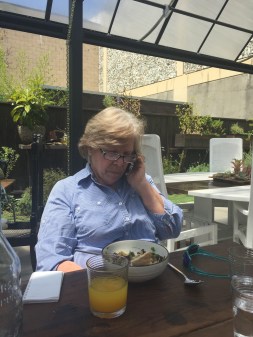
Diane on the phone with NPC during our meet-up!

As we were discussing our surgical experiences, lo and behold Diane noticed that she had missed a call from (drum roll please) …..Tampa! She was anxiously awaiting news about her latest lab values to confirm she was eligible and so we encouraged her to return the call right then. For goodness sakes – this was the call she had been waiting for!  Diane spoke to Caroline at NPC while we snapped a picture of her receiving news of her latest lab values in hopes of confirming a diagnosis. As she started writing her numbers down, it was clear that she had pHPT based on her elevated PTH. As soon as the call ended we were all cheering to high PTH!!! Diane is now awaiting her consultation call to schedule her surgery.

We wish both Rose and Diane the best of luck for successful surgeries and fast, easy recoveries. And if you are anxiously waiting to receive lab work results to confirm a diagnosis, you can certainly celebrate your elevated PTH with us too…. unless that is, you present as normohormonal (high calcium and normal pth). But I think we’ll save that for a future blog. LOL!

Wishing each and every one of you good health and happiness.

The Parathyroid Peeps

Reflecting Back and Looking Forward

This July 17th marks the one year anniversary of my parathyroid surgery.  (Coincidentally the month of July also marks Barbara’s anniversary of 4 years!) While this year has literally flown by, I can’t help but reflect on the major milestones I was able to accomplish thanks to my renewed health.

A year ago I still remember flying across the country to the Norman Parathyroid Center in Tampa, Florida and checking in at 5 am for my surgery. I was scared this disease was all in my head, as I had self-diagnosed and referred myself for surgery.  I was also scared that the surgeons might not find my tumor. Upon waking up from my 17 minutes surgery I was already feeling the changes in my body and the pain in my bones was already gone. I had won the battle with primary hyperparathyroid disease! Once I arrived back at home in San Francisco and realized how easy it should have been for my doctor to diagnose me I felt angry and let down. Primary Hyperparathyroidism is not a rare disease, so why is it not a condition that doctors learned much about in medical school? Why are endocrinologists so quick at prescribing medication instead of referring patients for surgery, when surgery is the only cure?

Last September I joined a FB support group for people with this disease. At last I was able to communicate with former patients but still felt that what I really wanted was to meet face to face with others who had also suffered from this disease and with whom I could relate. This FB search led me to Barbara and Joyce who live in the San Francisco Bay Area. After exchanging a few IM’s, the three of us decided it was time to meet in person. And so, last October, we met in Marin and an instant connection started. We couldn’t stop discussing our struggles for a diagnosis and cure and decided that we needed to join forces to do our part to educate others about primary hyperparathyroidism. Within a few days we were calling ourselves the Parathyroid Peeps.  We continued to meet on a regular basis and within a few short months we created a website and Facebook page. We wondered….. Could we make a difference? Would people read our blog posts? Could we work with the surgeons at the Norman Parathyroid Center to support the medical piece of our message?

During this month of July I am bursting with joy and celebrating the raising of awareness.  We are being contacted by people across the country who thank us for sharing our stories. Others have commented how helpful the podcasts have been, as they provide those who are seeking a diagnosis or those who have been diagnosed with this disease the information they need to make informed decisions.  We cannot thank our readers enough for reaching out to us to let us know that we are making a difference! Nothing makes us happier than to hear that people were able to get a successful surgery and they are now on their way to renewed health. We are equally excited for what lies ahead as we are still full of ideas and enthusiasm for continuing this journey with all of you joining us.

Sophie